Sources#
Summary#
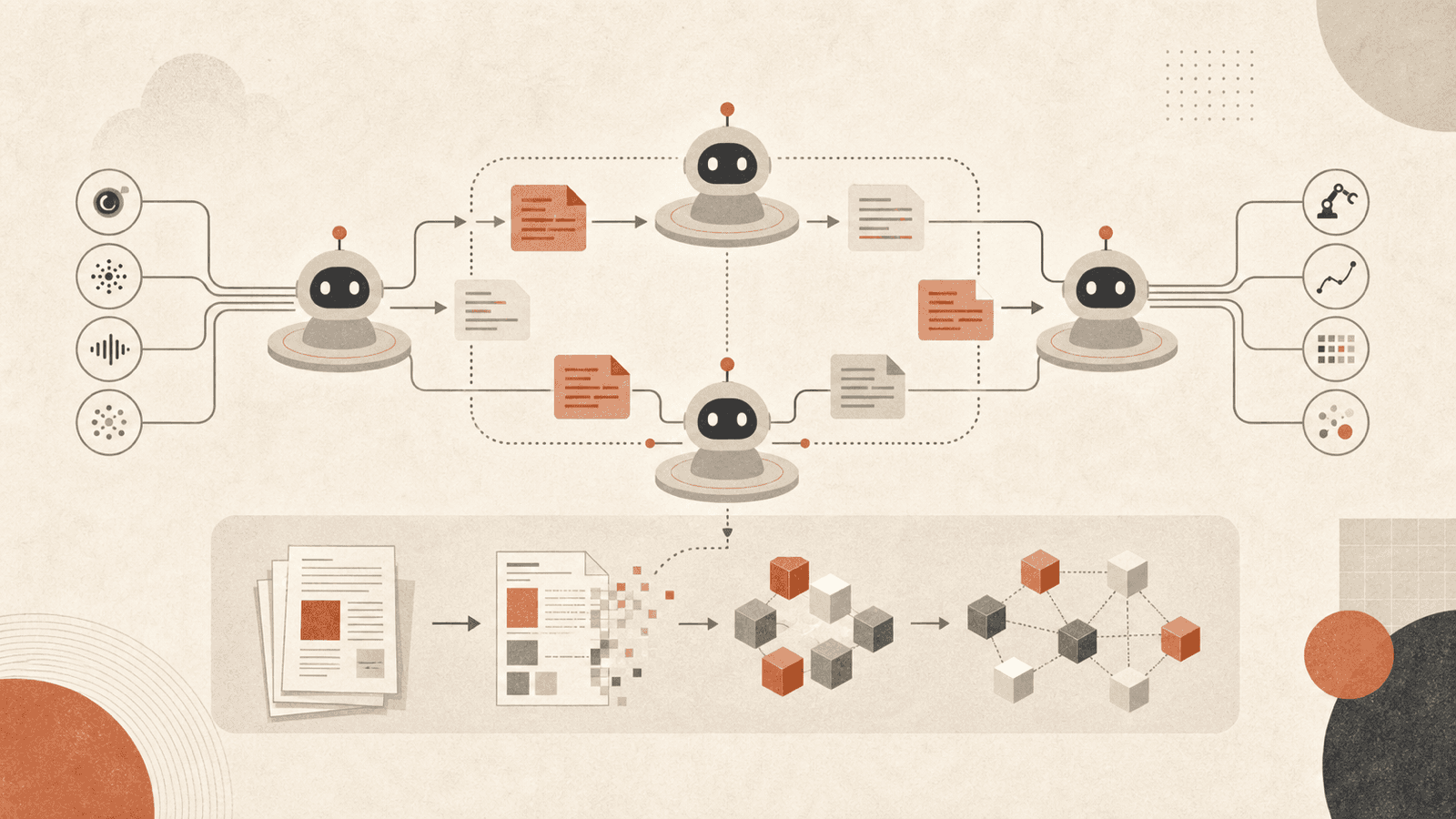
Andrej Karpathy's observation that the digital world is still built for humans and must be rewritten for agents. His "favorite pet peeve": documentation written to instruct a person. "Why are people still telling me what to do? I don't want to do anything. What is the thing I should copy-paste to my agent?" The agentic-native world decomposes work into sensors over the world and actuators over the world, with everything "described to agents first." It ends in agent representation for people and organizations — "my agent talks to your agent to figure out the details of our meetings."
The copy-paste-to-agent install#
The concrete seed (shared with Software 3.0): installing OpenClaw isn't a shell script, it's a block of text you paste to your agent, which then inspects your environment and debugs in the loop. Generalize it: the unit of distribution for agent-native software is a prompt/skill, not an executable. Docs, configs, and setup flows should ship as "here's what to hand your agent," not "here are the steps you perform."
Sensors and actuators#
Karpathy reframes agent infrastructure in robotics terms: decompose any workload into sensors (legible inputs the agent can read) and actuators (actions it can take), then make the surfaces agent-legible. He pairs this with heavy investment in "data structures that are very legible to the LLMs." The design question shifts from "what UI does the human need?" to "what does the agent perceive and what can it act on?"
The deployment friction tell#
His MenuGen test for whether infrastructure has gone agent-native: the code wasn't the hard part — deploying on Vercel was (DNS, service settings, menus, stringing services together, "so annoying"). The dream: "give a prompt to an LLM, build MenuGen, and I don't have to touch anything — it's deployed on the internet." When that round-trip needs zero human GUI-clicking, infrastructure has become agent-native. (Connects to MCP and Computer Use: MCP makes services programmatically agent-legible; computer use is the fallback when they aren't.)
The endpoint: agents representing principals#
The extrapolation is agent representation for people and orgs: scheduling, negotiation, and coordination done agent-to-agent. "I'll have my agent talk to your agent to figure out the details of our meetings." This is the social-protocol layer of an agent-native world — and the surface where AI Employee Framing / Human-AI Accountability Redesign questions (who is accountable for the agent's commitments?) become live.
Connections#
- Andrej Karpathy — the "docs written for humans" pet peeve
- Software 3.0 — the copy-paste-to-agent install is 3.0's distribution model
- MCP and Computer Use — MCP = structured agent-legibility; computer use = the GUI-driving fallback for non-agent-native services; both are the substrate this concept demands
- Agent Harness Engineering — building agent-legible environments is the harness-engineering discipline at the infrastructure layer
- Agent Loop Pattern — always-on agents acting via sensors/actuators are the runtime of an agent-native world
- Hermes Agent — a concrete agent-native daemon (AGENTS.md context, gateway connectors) bridging chat surfaces to agent actuators
- AI Employee Framing — "agents representing principals" raises the accountability questions of treating agents as actors
- Living Design System —
design_system.htmlis an example of making a codebase machine-legible (and human-legible) at once - Claude Code — the agent that consumes copy-paste skills and drives computer-use actuators
Open Questions#
- Who builds the agent-native rewrite of the long tail of human-facing services — the service owners, or a translation layer (MCP servers, computer-use agents) on top?
- Agent-to-agent negotiation needs trust, identity, and accountability primitives that don't exist yet. What's the protocol layer, and who governs it?
Sources#
Cited by 11
- Agent Harness Engineering
Patterns for scaffolding long-running LLM agents: environment design, progressive context disclosure, mechanical archit…
- Agent Loop Pattern
`/loop` (cron-scheduled) and Ralph Wiggum (backlog-draining) loops as next-generation agent primitive; AFK execution, p…
- AI Employee Framing
Kropp et al. (HBR May 2026, n=1,261): framing AI agents as "employees" vs "tools" cuts personal accountability −9pp, in…
- Andrej Karpathy
Co-founder OpenAI, ex-Tesla AI, Eureka Labs; coined "vibe coding," Software 1/2/3.0, "ghosts not animals," "agentic eng…
- The Future of Agent Interfaces
Interface future is layered: native interaction models for human collaboration, MCP/APIs for structured action, app pro…
- Human-AI Accountability Redesign
HBR five-pillar prescription: span-of-control redesign, role redesign, performance management reset, decision-rights/es…
- Living Design System
`design_system.html` extracted from repos as a portable, human- and machine-readable source of truth; component playgro…
- MCP and Computer Use
Anthropic's two complementary connector mechanisms: MCP for structured programmatic access (Salesforce/Drive/Gmail/Slac…
- AI Engineering & Agent Tooling
Map of Content for the ai-engineering domain — 45 concepts. Curated entry point; see Home for all domains.
- Open Questions Backlog
_124 pages with open questions, as of 2026-06-19._
- Software 3.0
Karpathy's taxonomy: 1.0 code, 2.0 weights, 3.0 prompting; LLM as programmable interpreter; MenuGen "shouldn't exist";…
Related articles
- Harness Shrinkage as Models Improve
Prompt scaffolding shrinks each model release; Cat Wu's pruning discipline; Boris Cherny "100 lines of code a year from…
- Loop Engineering
Replacing yourself as the agent's prompter by designing the system that prompts it: a recursive-goal loop built from fi…
- Claude Code Auto Mode
Claude Code permission mode using a classifier to auto-approve safe tool calls and block risky ones; middle ground betw…
- Claude Code
Anthropic's agentic coding product; created by Boris Cherny late 2024; TypeScript/React; CLI/desktop/web/mobile/IDE sur…
- Claude Code Best Practices
Anthropic's guide to effective Claude Code usage: context management, verification-driven development, explore→plan→cod…