資料來源#
摘要#
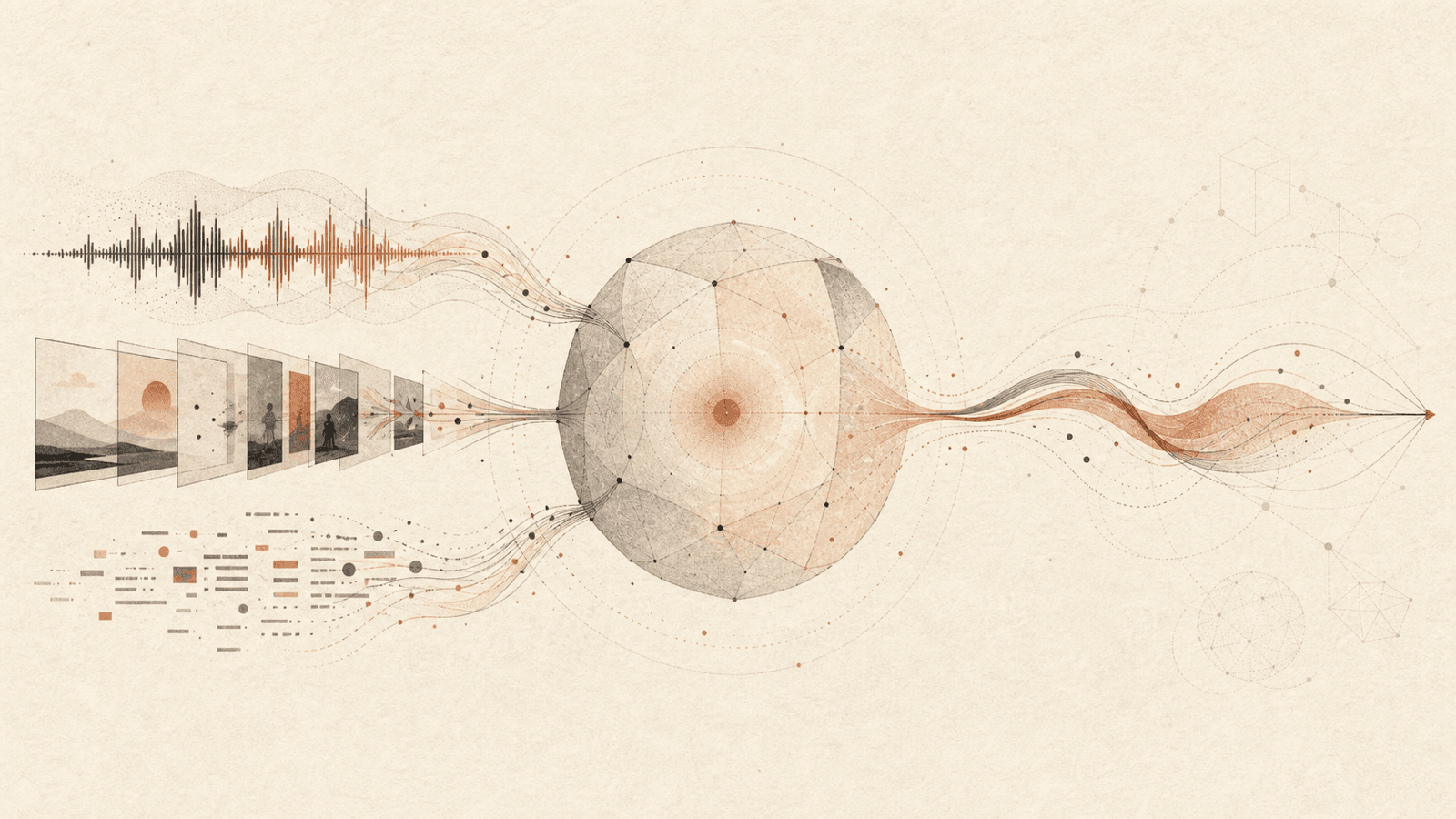
互動模型(interaction model) 是一種 原生 處理互動的模型——持續接收音訊、視訊與文字,並即時思考、回應與行動——而不是透過外部鷹架(VAD、輪次偵測、對話管理 harness)來模擬即時行為。由 Thinking Machines Lab 於 2026 年 5 月以研究預覽形式發布,首個模型名為 TML-Interaction-Small。
核心賭注:互動性應當與智能一同擴展。 如果互動是模型的一部分,那麼擴展模型就會讓它同時變得更聰明 且 成為更好的協作者。如果互動寄生在手工打造的 harness 裡,The Bitter Lesson 告訴我們:這套 harness 會被通用能力的成長所超越。
The thesis in one line#
「要讓互動性隨智能擴展,它必須成為模型本身的一部分。」
這是把 harness 收縮的論點(參見 Harness Shrinkage as Models Improve)套用到 互動層:VAD、輪次邊界預測、對話狀態機——這些全都「明顯不如模型本身聰明」——都應該消融進模型行為之中。一旦如此,那些 harness 無法 支援的能力(主動插話、邊聽邊說、對視覺線索做出反應)就會變成模型行為的特例,並隨規模一同進步。
What it unlocks (capabilities, not harness features)#
- 無縫的對話管理——模型隱性地追蹤說話者是在思考、讓出發言權、自我修正,還是邀請回應。不需要獨立的對話管理元件。
- 語音與視覺插話——模型會在情境需要時介入(「當我說錯話時打斷我」、「當我寫出 bug 時告訴我」),而不只在輪次結束時。
- 同時發聲——使用者與模型同時說話(即時翻譯)。
- 時間感知——對流逝時間有直接的感受(「我跑一英里花了多久?」)。
- 同時的工具呼叫/搜尋/生成式 UI——在聆聽與說話的同時,模型並行搜尋、瀏覽、生成 UI,並把結果重新編織回對話中。
關於這些如何被展示與衡量,參見 Full-Duplex Interaction 與 Interactivity Benchmarks。
Why turn-based interfaces are the bottleneck#
今天的模型「以單一執行緒體驗現實」:它們盲目地等待,直到使用者打完字/說完話;接著盲目地生成,直到完成或被打斷。對協作而言,這是一條狹窄的通道——它限制了一個人的知識、意圖與判斷有多少能傳達給模型,也限制了模型的工作有多少是可被看見的。原文的類比是:用電子郵件而非當面去化解一場關鍵的分歧。完整論述見 Turn-Based Interface Bottleneck。
Architecture (three load-bearing ideas)#
- Time-Aligned Micro-Turns——輸入與輸出都是連續的串流,以 200ms 為單位的區塊來處理/生成;沒有人為的輪次邊界。沉默、重疊與打斷都保留在上下文中。
- Interaction / Background Model Split——一個具時間感知的互動模型維持即時的臨場感;一個非同步的背景模型負責持續的推理、工具使用與更長時程的工作。互動模型以一份 豐富的上下文封包(完整對話,而非獨立的查詢)來委派任務,並在符合使用者當下動作的時機把結果交錯地織回來。淨效果是:「以非思考型模型的回應延遲,達成推理型模型的規劃、工具使用與 agentic 工作流程。」
- Encoder-Free Early Fusion——以最小的前處理取代龐大的獨立編碼器/解碼器:音訊以 dMel + 輕量嵌入的形式輸入;影像透過 hMLP 轉為 40×40 的 patch;音訊則經由 flow head 輸出。所有元件都與 transformer 一同從零協同訓練。
再加上工程面:用於低開銷、高頻率小型 prefill/decode 的串流工作階段(已上游合併進 SGLang);針對延遲調校的 MoE kernel(以 gather+gemv 取代 grouped gemm);透過 batch-invariant kernel(<5% 開銷)達成訓練器與取樣器之間的位元級對齊,以確保穩定性與可除錯性。
Safety angle#
即時互動對安全性帶來的壓力,與以輪次為基礎的交流不同。TML 的工作聚焦於兩條軸線:
- 適配模態的拒絕——以 TTS 生成的拒絕/過度拒絕訓練資料,讓口說的拒絕既口語化、卻同樣堅定。
- 長時程的穩健性——自動化的紅隊 harness 生成多輪拒絕資料,維持與文字模型拒絕行為的一致性。
Limitations (per the post)#
- 長工作階段——連續的 A/V 會快速累積上下文;串流工作階段的設計能妥善處理短到中等長度的情況,但非常長的工作階段需要謹慎的上下文管理(與 Context Window Smart Zone 相呼應)。
- 算力與連線——低延遲的 A/V 串流需要可靠的連線;少了它就會嚴重劣化。
- 規模——
TML-Interaction-Small是 276B MoE / 12B active;更大的預訓練模型在今天這套機制下太慢、無法服務;更大的模型則承諾「今年稍晚」推出。 - 背景 agent——agentic 智能被承認是必要的,但相對於即時方面的工作,仍探索不足。
相關連結#
- Software 3.0——Karpathy 把互動模型視為邁向 3.0 神經電腦的一步
- The Bitter Lesson——整套方法所依憑的原則:擴展後的通用方法勝過手工打造的結構
- Harness Shrinkage as Models Improve——同樣的手法,套用在互動 harness 上(VAD/輪次偵測消融進模型)
- Turn-Based Interface Bottleneck——正在被解決的問題
- Time-Aligned Micro-Turns、Interaction / Background Model Split、Encoder-Free Early Fusion——三根架構支柱
- Full-Duplex Interaction——這所促成的各種互動模式
- Interactivity Benchmarks——如何把智能+互動性合在一起衡量
- Thinking Machines Lab、TML-Interaction-Small——誰打造了它、模型是什麼
- Context Window Smart Zone——長工作階段的侷限與 smart-zone 問題相呼應
- AI Employee Framing / Human-AI Accountability Redesign——兩者都反對純粹為自主性最佳化;互動模型是讓人類留在迴圈中的 介面側 解答
- Design Concept Grilling——以協作、即時的迭代取代「給規格然後走人」;互動模型正是能讓這種拷問式協作感覺起來原生的底層基礎
- Agent Harness Engineering——harness 與模型之間的分工問題,在這裡就互動層而言被明確地導向模型那一側
- Claude Opus 4.7——
xhigh努力等級作為一項基線設定出現(GPT-realtime-2.0 minimal/xhigh) - HTML as the New Markdown——對「更好的人類與 AI 協作」的一個姊妹解答,但採用相反的機制:TML 把 即時 介面消融進模型,而 Thariq Shihipar 則豐富 非同步 的產物;兩者都讓人類留在迴圈中
待解決的問題#
- 互動/背景的拆分是否能一般化,還是只是個過渡性產物,直到單一模型同時夠快又夠深為止?
- 「互動性隨智能擴展」只是個斷言;2026 年稍晚更大模型的發布,就是對它的檢驗。
- 已宣布針對互動性基準的研究經費——什麼會成為視訊主動性領域中 FD-bench 的對應物?
資料來源#
Cited by 23
- Agent Harness Engineering
Patterns for scaffolding long-running LLM agents: environment design, progressive context disclosure, mechanical archit…
- AI Employee Framing
Kropp et al. (HBR May 2026, n=1,261): framing AI agents as "employees" vs "tools" cuts personal accountability −9pp, in…
- Opinions on Using AI Tools & the Future of the Software Engineering Role
Debate map of four stances on using AI tools (bullish-insider / pragmatist-practitioner / skeptic-governance / architec…
- Anthropic
AI safety company / vendor of Claude; mission-as-tiebreaker culture; ~30–40 PMs across teams; Mike Krieger leads Labs r…
- Context Window Smart Zone
Smart zone vs dumb zone (Dex Hardy / Matt Pocock): quadratic attention scaling, ~100K marker independent of advertised…
- Design Concept Grilling
Matt Pocock's `grill-me` skill; reach Brooks "design concept" before any plan; counter to specs-to-code; PRD as destina…
- Encoder-Free Early Fusion
Multimodal design with minimal pre-processing instead of large standalone encoders: dMel audio embedding, 40×40-patch h…
- Full-Duplex Interaction
Perceive-and-respond simultaneously across modalities; proactive interjection, visual-cue reactions, simultaneous speec…
- The Future of Agent Interfaces
Interface future is layered: native interaction models for human collaboration, MCP/APIs for structured action, app pro…
- Harness Shrinkage as Models Improve
Prompt scaffolding shrinks each model release; Cat Wu's pruning discipline; Boris Cherny "100 lines of code a year from…
- HTML as the New Markdown
Thariq Shihipar's thesis: as models improve, thousand-line markdown plans overwhelm the *human*; HTML artifacts (visual…
- Human-AI Accountability Redesign
HBR five-pillar prescription: span-of-control redesign, role redesign, performance management reset, decision-rights/es…
- Interaction / Background Model Split
Dual-model architecture: time-aware interaction model stays present; async background model handles deep reasoning/tool…
- Interactivity Benchmarks
FD-bench, Audio MultiChallenge + new TimeSpeak/CueSpeak (proactive audio) and RepCount-A/ProactiveVideoQA/Charades (vis…
- Interaction & Multimodal
Map of Content for the interaction-multimodal domain — 7 concepts. Curated entry point; see Home for all domains.
- Open Questions Backlog
_96 pages with open questions, as of 2026-06-14._
- Software 3.0
Karpathy's taxonomy: 1.0 code, 2.0 weights, 3.0 prompting; LLM as programmable interpreter; MenuGen "shouldn't exist";…
- Thariq Shihipar
Engineer on the Claude Code team at Anthropic; "HTML is the new markdown" and "compute allocator" framings; three HTML-…
- The Bitter Lesson
Sutton 2019: scaled general methods beat hand-engineered structure; recurring justification across the wiki for dissolv…
- Thinking Machines Lab
AI research lab behind interaction models (May 2026); harness-dissolves-into-model thesis; upstreamed streaming-session…
- Time-Aligned Micro-Turns
The core interaction-model move: input/output as continuous streams in ~200ms interleaved chunks, no turn boundaries; s…
- TML-Interaction-Small
TML's first interaction model: 276B MoE / 12B active, audio+video+text in / text+audio out, 200ms micro-turns, async ba…
- Turn-Based Interface Bottleneck
Why current AI interfaces limit collaboration: single-thread turn-taking is a bandwidth bottleneck; humans pushed out b…
Related articles
- Harness Shrinkage as Models Improve
Prompt scaffolding shrinks each model release; Cat Wu's pruning discipline; Boris Cherny "100 lines of code a year from…
- Turn-Based Interface Bottleneck
Why current AI interfaces limit collaboration: single-thread turn-taking is a bandwidth bottleneck; humans pushed out b…
- The Bitter Lesson
Sutton 2019: scaled general methods beat hand-engineered structure; recurring justification across the wiki for dissolv…
- Time-Aligned Micro-Turns
The core interaction-model move: input/output as continuous streams in ~200ms interleaved chunks, no turn boundaries; s…
- Agent Harness Engineering
Patterns for scaffolding long-running LLM agents: environment design, progressive context disclosure, mechanical archit…