資料來源#
摘要#
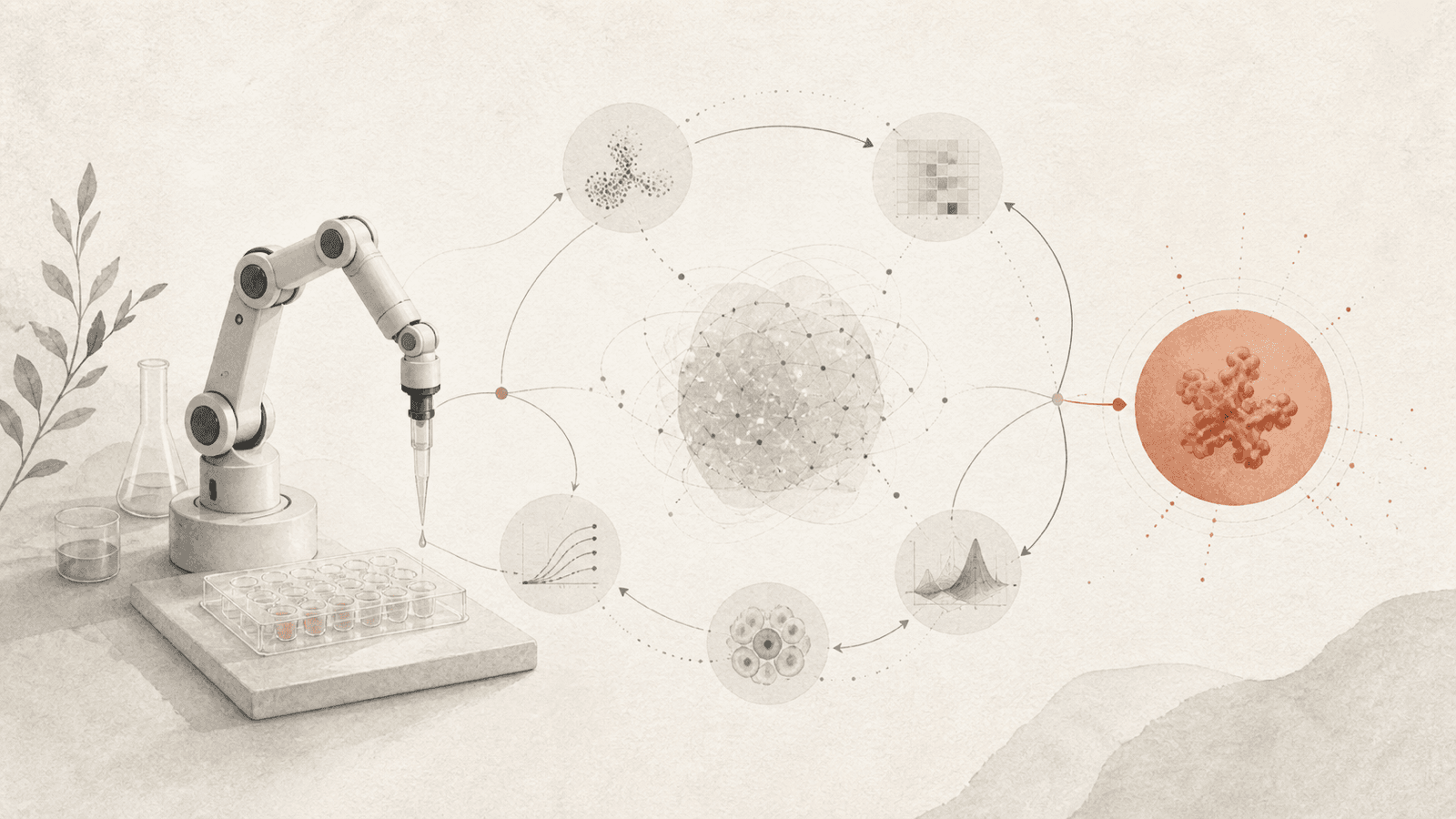
透過 Mythos 5(解除生物安全限制版本的 Fable 5),Anthropic 發布了首個 Claude 成果,其中模型在很大程度上獨立進行新穎的科學研究——選擇實驗步驟、運行領域工具、從失敗中復原,並產生與受過訓練的人類和近期發表的 baselines 相匹配或超越的發現。這是 AI-Driven Formal Proof Search 的 wet-lab / life-sciences 對應版本:在 formal proof search 擁有 Lean 編譯器作為即時驗證器的情況下,科學的驗證器則是實驗——過程更慢且更昂貴——因此這裡的聲明是實證展示與精選範例,而非經編譯器確認的保證。這些結果是迄今為止對於 recursive self-improvement「較不保守」解讀的最有力證據:亦即「汗水正在被自動化」已延伸至發現本身,且 research taste 可能「只是 AI 暫時失敗、隨後便能掌握的另一項能力」。
The three results#
Drug / protein design — autonomy at human level#
Anthropic 的內部蛋白質設計專家利用 Mythos 5 將藥物設計的某些方面加速了「約 10 倍」。在一項研究中,Mythos 5——配備了蛋白質設計與 bioinformatics 工具,但沒有人類協助——達到或超越了受過訓練的人類操作員,執行了「科學家通常完成的所有任務:選擇結合位點、選擇並運行蛋白質設計工具,以及在過程中從失敗中復原」。14 個蛋白質靶點中有 9 個產生了目前正在調查的強效藥物設計候選物(免疫檢查點、生長因子/受體信號傳導、神經退化、肌肉疾病、更具挑戰性的結構靶點)。
Novel hypotheses — preferred over Opus-class, one corroborated#
Mythos 5 是 Anthropic「首個能持續產生新穎、引人入勝的科學假說的模型」。在與 Opus-class 模型的雙盲對頭比較中,Anthropic 的科學家在 ~80% 的時間裡更青睞 Mythos 的 molecular-biology 假說,並將其中幾項推進至實驗評估。其中一個 Mythos 假說——關於一個 E. coli 蛋白質的新穎機制——得到了另一個研究相同問題的實驗室的獨立證實。
Genomics — a week of autonomy beating a published model at 100× smaller#
在「一週多基本上自主的工作」中,Mythos 5 收集了橫跨 138 個動物物種、數百萬個細胞的單細胞數據,然後設計並訓練了一個自定義的 machine-learning 模型,用以識別即使在親緣關係較遠的生物體中也履行相同職責的細胞。在僅有高階人類輸入的情況下,該受訓模型超越了近期發表於 Science 的模型——儘管其規模小了 100 倍。 Anthropic 計劃發表該研究。
The dual-use shadow#
這項相同的能力,正是為什麼在通用存取的 Fable 5 中生物學必須受到保護。促成此項評估的主因是:預測基因修飾如何影響 adeno-associated virus (AAV) 的 capsid assembly——這是一個真實的基因治療組件,其設計能力「若落入壞人手中,可能會使危險病毒的設計成為可能」。Mythos-class 模型在未針對該任務進行訓練的情況下,僅憑生物學推理便在此任務上超越了專用的 protein-language models。自主科學能力與 bio-uplift 風險是同一種能力的兩面——這正是 RSP 的 CB 判定與 bio classifier 旨在管理的關鍵衝突。
Why it matters for the trajectory#
- 汗水自動化延伸至發現領域。 When AI builds itself 曾指出,大多數的研究進展都是漸進式的「擴大規模、看哪裡壞掉、修復它」的工作,而這正是 Claude 所擅長的。自主的 genomics——收集數據、設計模型、進行訓練、擊敗 baseline——是在科學領域(而非僅僅在工程領域)運行的 end-to-end 循環。
- 它削弱了品味護城河。 「持續產生新穎、引人入勝的假說」和「僅有高階人類輸入」正是那些被認為應由人類保留的方向設定功能。約 80% 的雙盲偏好是一個具體的突破口——儘管這仍是由人類評判且資料來源於內部。
- 能力依舊參差不齊,仍受限於驗證。 這些是精選的展示(Jagged Intelligence (Ghosts, Not Animals));科學的驗證器是緩慢的 wet-lab 驗證,而非編譯器,因此與 AI-Driven Formal Proof Search 不同,其結果無法自動驗證——它們有待實驗與同行評審。這使得它鄰近但仍低於 Anthropic 所設防的 AI-R&D autonomy 閾值。
相關連結#
- AI-Driven Formal Proof Search——形式數學的同類:AI 進行新穎的研究,但擁有即時的編譯器-驗證器;科學則以(緩慢、高昂的)實驗代替,因此驗證在科學領域是更困難的瓶頸
- Recursive Self-Improvement——「汗水正在被自動化」最清晰的 wet-lab 證據,也是該文章較不保守的解讀
- Research Taste as the Human Bottleneck——自主的 hypothesis-generation 以及「僅有高階人類輸入」直接削弱了人類殘存的比較優勢
- AI R&D Autonomy Evaluation (AECI)——鄰近的自主性:模型設計並訓練另一個模型並擊敗已發表的 baseline,這具備了 AI-R&D 的雛形,儘管是在 genomics 領域而非 AI 自身
- Task Time-Horizon Scaling——「超過一週基本上自主的工作」是一個具體的長週期數據點,超越了 Mythos Preview 所測量的 16 小時
- Jagged Intelligence (Ghosts, Not Animals)——注意事項:這些是對於仍然參差不齊的能力之精選展示,而非一致的能力表現
- The Verifiability Thesis——極限情況:科學的可驗證性低於 Lean 證明,因此自主性超越了廉價的驗證——是實驗而非編譯器作為回饋訊號
- Capability-Gated Model Fallback——雙重用途的反面;AAV 結果是 bio classifier 設置的動機實例
- Responsible Scaling Policy Evaluations——這些能力所推進的 CB(化學/生物)風險領域
- Claude Mythos 5——產生這些結果的模型(生物安全限制已解除)
- Claude Fable 5——生物學受到保護的通用存取同類模型
待解決的問題#
- 每項結果皆由 Anthropic 報告且經過範例篩選;genomics「小 100 倍且擊敗 Science」的聲明為「計劃發表」——在外部同行評審中能有多少內容存活下來?
- 科學的驗證差距:formal-proof 循環是自我驗證的;而在這裡,一個錯誤但自信的假說需要付出一次 wet-lab 週期來證偽。在缺乏快速驗證器的情況下,自主性是否會加劇驗證瓶頸,而非緩解它?
- 如果 hypothesis-generation 的偏好度確實達到 ~80%,那麼「research taste」還有多少能作為人類特有的功能保留下來——而你又該如何衡量殘餘的部分?
資料來源#
- Claude Fable 5 and Claude Mythos 5 — §"Evaluating Claude Fable 5 and Claude Mythos 5"(藥物設計;新穎假設;genomics)與 §"Biology and chemistry"(AAV 雙重用途)
Cited by 13
- AI-Driven Formal Proof Search
LLM generates Lean, compiler verifies every step → eliminates hallucination; DeepMind resolves 9/353 Erdős + 44/492 OEI…
- AI R&D Autonomy Evaluation (AECI)
How Anthropic measures whether a model can automate or dramatically accelerate AI research — the capability that drives…
- Anthropic
AI safety company / vendor of Claude; mission-as-tiebreaker culture; ~30–40 PMs across teams; Mike Krieger leads Labs r…
- Capability-Gated Model Fallback
Fable 5's safeguard architecture: classifiers detect cyber / bio-chem / distillation queries and route the response to…
- Claude Fable 5
Anthropic's first generally-available Mythos-class model (June 2026) — state-of-the-art on nearly all benchmarks; the s…
- Claude Mythos 5
The safeguards-lifted form of Claude Fable 5 (June 2026): same underlying Mythos-class model, deployed through Project…
- Jagged Intelligence (Ghosts, Not Animals)
"Ghosts not animals": jagged statistical circuits, no intrinsic motivation; car-wash/strawberry failures; stay in the l…
- Governance & Workforce
Map of Content for the governance-workforce domain — 11 concepts. Curated entry point; see Home for all domains.
- Open Questions Backlog
_96 pages with open questions, as of 2026-06-14._
- Recursive Self-Improvement
An AI system autonomously designing and developing its own successor; Anthropic Institute's *When AI builds itself* arg…
- Research Taste as the Human Bottleneck
The narrowing human role as AI absorbs execution: choosing which problems matter, which results to trust, and when an a…
- Responsible Scaling Policy Evaluations
Anthropic's RSP gates deployment on pre-release capability evaluations in CBRN, automated AI R&D, and high-stakes misal…
- Task Time-Horizon Scaling
METR's measure of the task length AI can complete reliably on its own, doubling roughly every 4 months (up from every 7…
Related articles
- Claude Opus 4.8
Anthropic's most capable general-access model (May 2026); upgrade on Opus 4.7 in SWE/agentic/knowledge work; does not a…
- Mythos Model
Anthropic preview-tier frontier model and the first member of the Mythos-class tier (above Opus); gated for safety, use…
- Recursive Self-Improvement
An AI system autonomously designing and developing its own successor; Anthropic Institute's *When AI builds itself* arg…
- Responsible Scaling Policy Evaluations
Anthropic's RSP gates deployment on pre-release capability evaluations in CBRN, automated AI R&D, and high-stakes misal…
- LLM-Driven Vulnerability Research
Claude Mythos Preview's emergent cybersecurity capabilities: autonomous zero-day discovery, full exploit chains, and An…