資料來源#
摘要#
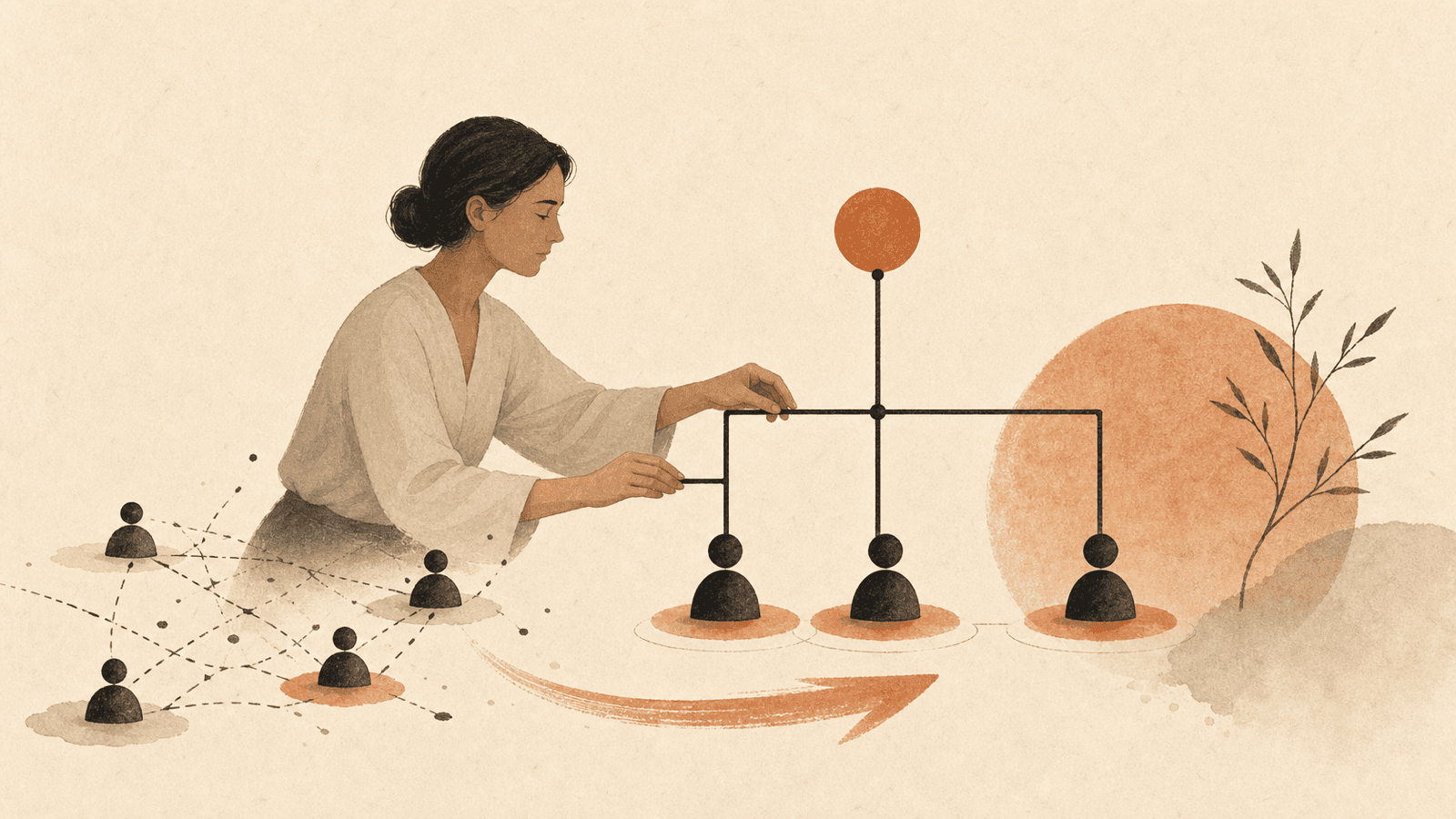
來自 Kropp 等人(HBR May 2026)的五大支柱處方,用於在 agentic AI 規模化時重新設計組織結構。定位問題(AI 作為員工 vs 工具)確實存在,但屬於下游——根本問題在於為人類步調與人類當責所打造的工作、角色與治理,無法容納 agents。將 AI 疊加在既有的 workflows 之上會放大錯誤並稀釋責任歸屬。能擷取價值的公司會重新設計工作;做不到的公司則會看到審查嚴謹度下滑、責任歸屬碎裂。
為何重新設計是被迫的#
隨著 AI 承接執行工作,人類角色會集中於監督、判斷、關係建立以及駕馭模糊性。這項轉變在多數職場中都尚未被明確指認。當產出增加時,監督能力並不會自動隨之擴張——一位團隊原本每週產出 5 份文件的管理者,若不重新設計這個單位,便無法監督一個每週產出 50 份的 AI。
MSM/agentic-misalignment 的世界(Agentic Misalignment (AM))讓這一點更加尖銳:在每個動作上僅受到薄弱人類監督、卻能採取重大行動的 agents,正是當責重新設計最為關鍵之處。
五大陣線#
1. 當責範疇 + 管理幅度#
監督能力不會隨著產出量而擴張。重新設計團隊規模與彙報結構,使監督維持在可掌控的範圍內。當責的單位應該與人類實際能夠審查的單位相匹配。
2. 重新設計角色 + 釐清期望#
- 在職務說明中明確載明對 AI 系統的監督責任。
- 為將 AI 納入流程後的工作速度與工作量設定務實的期望。
- 指認那些依然關鍵、持續存在的人類技能——也就是人類不可被取代之處。
與 Engineer PM Convergence 相關聯:這些持續存在的人類技能包括品味、判斷力、對模糊性的容忍度,以及面對客戶的能力。
3. 重置績效管理#
獎勵監督的品質與對 AI 的有效調度(orchestration),而不只是速度與產出。產出無論如何都會增加;真正形成差異的,是人類是否加入了品味/判斷/錯誤攔截。審查 agent 的工作成果就是新的價值貢獻——績效考核必須衡量它。
4. 將 AI 視為帶有明確人類當責的軟體#
這個直白的處方:agents 是軟體自動化。它們無法被究責。產出需要一個明確顯著、負起責任的人類——「當 AI 對某個結果有所貢獻時,應該讓對其負責當責的人類清楚意識到這一點。」 在受監管的環境中尤其關鍵。
三個子陣線:
- 決策權——agent 自主執行哪些事,相對於哪些需要明確的人類核可。(呼應 Claude Code Auto mode 的設計——分類器自動核可安全的動作、攔截有風險的動作。)
- 升級——什麼會觸發審查、誰來介入、誰承擔延遲或錯誤的成本。
- 後果——當 agent 失敗時,接下來會發生什麼;負責當責的人類會持續監控並改善 agent 的表現。
5. 為 workflow 而非人類角色設計 agentic 單位#
「AI 作為 1:1 員工」的定位假設了有界限的角色 + 有限的人類能力 + 委派階層。AI 不具備這些限制中的任何一項。單一 agent 可以橫跨許多 workflows 運作;多個 agents 也可以重塑一份工作。預設採用「一個 agent 對應一個人類角色」會推動公司走向一對一的替換,並低估了重新設計的機會。
更好的做法:挑選 workflow 真正需要的 agentic 單位——也就是橫跨整個團隊或流程使用的、更廣泛的功能性能力。
認知落差(引用)#
BCG Henderson Institute:76% 的高階主管相信員工對採用 AI 感到熱情;但只有 31% 的個人貢獻者表示同感。在不重新設計角色與當責的情況下,要求員工用 AI「做更多」只會擴大這個落差。採用是跟隨管理者的角色示範而來,而不是熱情宣傳活動,也不是擬人化。
與既有 wiki 主題的連結#
- Engineer PM Convergence —— 持續存在的人類技能(品味、對模糊性的容忍度)與這篇論文所說人類角色集中之處相吻合。圍繞監督品質重置 PM(績效管理),是「工程師之所以變成 PM,是因為瓶頸發生轉移」這件事在勞動力面的鏡像。
- AI Native Product Cadence —— Cat Wu 對 Anthropic 如何重新設計產品節奏的描述,是這種針對工程職能的重新設計的一個具體實例。HBR 的處方則是跨職能的版本。
- Claude Code Auto Mode —— 工具層級的決策權設計。那個自動核可安全動作/攔截有風險動作的分類器,正是「決策權」子陣線的具體化身。
- Harness Shrinkage as Models Improve —— 不會縮減的,是位於邊界處的人類角色;這篇論文指認了那個角色會變成什麼。
- Agent Loop Pattern —— loops 提高了每個人類所對應的 agent 產出量;這篇論文中的管理幅度重新設計,正是它所欠缺的搭配。
相關連結#
- Agent-Native Infrastructure —— agent 對 agent 的基礎設施需要這項重新設計所要求的當責/身分基元
- 伴隨概念:AI Employee Framing
- 成本機制:AI Brain Fry
- 決策權實例:Claude Code Auto Mode
- 勞動力轉變:Engineer PM Convergence
- 產出端的加速器:Agent Loop Pattern
- 風險面:Agentic Misalignment (AM)
- 產品端實例:AI Native Product Cadence
- 介面端的互補:Interaction Models —— 組織重新設計讓人類保持當責;互動模型則在介面層級讓人類保持在流程中(TML 所謂「人類是被介面排除,而非被工作排除」)
- 角色演進的互補:Compute Allocator —— 指認了個人 IC 的角色(「決定什麼值得投入運算」),而這項重新設計治理的正是該角色的監督品質與決策權
- 非程式碼產出面:Cowork —— 簡報/檔案/收件匣這類產出缺乏編譯器/測試的驗證,因此當責重新設計只會更重要,而非更不重要
- 介面端的鏡像:Turn-Based Interface Bottleneck —— 同一批判的介面層級版本:不要把自主性當成目標,從而把人類推向邊緣
- 單人創辦人的應用:Founder as Agent Orchestrator —— 五大支柱的重新設計框架坍縮到一個人身上,但當責問題並不會消失;創辦人同時保有決策權與風險曝險
- 決策權的底層基質:MCP and Computer Use —— 需要被治理的動作面;「agent 透過 MCP/computer use 自主執行哪些事,相對於哪些需要明確的人類核可」正是決策權子陣線的具體形式
衍生內容#
- Orchestration vs Employee Framing: Reconciling the Founder's Playbook with HBR's Accountability Evidence —— 將這篇論文的五大支柱框架套用到單人創辦人的情境;顯示框架在哪些地方能乾淨地坍縮,以及當責工作在哪些地方並不會消失
資料來源#
Cited by 20
- Agent Loop Pattern
`/loop` (cron-scheduled) and Ralph Wiggum (backlog-draining) loops as next-generation agent primitive; AFK execution, p…
- Agent-Native Infrastructure
The world is still built for humans and must be rewritten for agents; "what do I copy-paste to my agent?"; sensors/actu…
- AI Brain Fry
Kropp et al. 2026/03: mental fatigue from excessive AI oversight increases minor errors +11%, major errors +39%; cognit…
- AI Employee Framing
Kropp et al. (HBR May 2026, n=1,261): framing AI agents as "employees" vs "tools" cuts personal accountability −9pp, in…
- AI Native Product Cadence
Cat Wu's 6mo→1mo→1day cadence at Anthropic: research-preview branding, mission-as-tiebreaker, evergreen launch room, li…
- AI-Native Product Org Bottlenecks
AI-native product-org bottleneck is accountable taste at speed: dogfooding trains taste, evals encode it, and accountab…
- Opinions on Using AI Tools & the Future of the Software Engineering Role
Debate map of four stances on using AI tools (bullish-insider / pragmatist-practitioner / skeptic-governance / architec…
- Claude Code Auto Mode
Claude Code permission mode using a classifier to auto-approve safe tool calls and block risky ones; middle ground betw…
- Compute Allocator
The human's evolving role: deciding what's worth spending compute on; ~1% of generated tokens ship, 99% is scaffolding…
- Cowork
Anthropic's non-code knowledge-work agent product; sibling to Claude Code; output is decks/inbox/dossiers; same MCP/com…
- Engineer PM Convergence
Generalists across disciplines; product taste as bottleneck skill; Anthropic Claude Code team as case study; "just do t…
- Founder as Agent Orchestrator
Founder role shift: less individual contributor, more orchestrator of specialized AI assistants; non-technical founders…
- Harness Shrinkage as Models Improve
Prompt scaffolding shrinks each model release; Cat Wu's pruning discipline; Boris Cherny "100 lines of code a year from…
- Human-in-the-Loop Boundaries
Humans belong at allocation, understanding, design-concept, risk, and accountability boundaries; they slow the system d…
- Interaction Models
Thinking Machines Lab (May 2026): models that handle audio/video/text interaction natively in real time instead of via…
- MCP and Computer Use
Anthropic's two complementary connector mechanisms: MCP for structured programmatic access (Salesforce/Drive/Gmail/Slac…
- Governance & Workforce
Map of Content for the governance-workforce domain — 11 concepts. Curated entry point; see Home for all domains.
- Open Questions Backlog
_96 pages with open questions, as of 2026-06-14._
- Orchestration vs Employee Framing: Reconciling the Founder's Playbook with HBR's Accountability Evidence
Reconciles the Founder's Playbook orchestration framings with HBR Kropp et al.'s accountability evidence; "orchestratio…
- Turn-Based Interface Bottleneck
Why current AI interfaces limit collaboration: single-thread turn-taking is a bandwidth bottleneck; humans pushed out b…
Related articles
- Claude Code
Anthropic's agentic coding product; created by Boris Cherny late 2024; TypeScript/React; CLI/desktop/web/mobile/IDE sur…
- AI Employee Framing
Kropp et al. (HBR May 2026, n=1,261): framing AI agents as "employees" vs "tools" cuts personal accountability −9pp, in…
- Harness Shrinkage as Models Improve
Prompt scaffolding shrinks each model release; Cat Wu's pruning discipline; Boris Cherny "100 lines of code a year from…
- AI Brain Fry
Kropp et al. 2026/03: mental fatigue from excessive AI oversight increases minor errors +11%, major errors +39%; cognit…
- Engineer PM Convergence
Generalists across disciplines; product taste as bottleneck skill; Anthropic Claude Code team as case study; "just do t…