資料來源#
摘要#
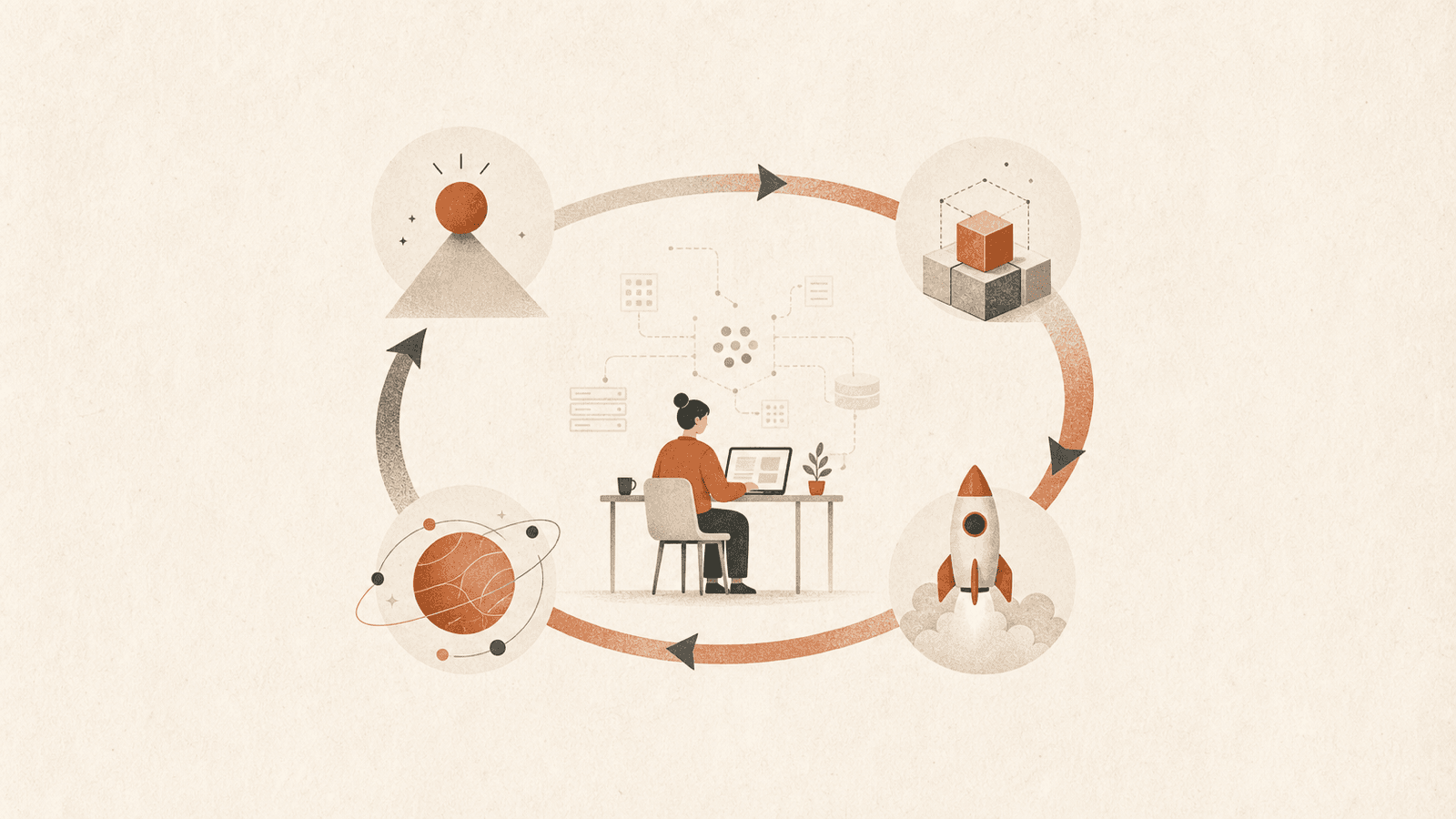
Anthropic 於 2026 年對經典 Lean/YC 新創發展軌跡(驗證 → 募資 → 招聘 → 建造 → 募集更多資金 → 增長 → 招聘更多人)進行了重新定義,將其劃分為明確將 AI 視為核心基礎設施的四個階段:Idea → MVP → Launch → Scale。結構性的轉變在於:每個新階段不再需要更大的團隊、不同的技能組合或新一輪的資金募集。「精實十人獨角獸」被定位為刻意追求的目標,而非克難的例外。每個階段都保留了其傳統的退出條件(問題-解決方案適配 → 產品-市場適配 → 可重複增長 → 具防禦力的規模),但其過渡路徑將數個季度壓縮成了數週。
資料來源#
The Founder's Playbook: Building an AI-Native Startup (Anthropic,2026 年 5 月)。這本 36 頁的電子書圍繞此四階段框架展開;並將 Claude (Chat / Cowork / Code) 定位為使每個階段在沒有傳統員工編制的情況下皆可行的基礎設施。
四個階段#
Idea —— 以研究為導向的驗證#
目標: 在投入開發資源之前,收集定性證據以證明真實問題確實存在,且所提之解決方案能解決該問題。
退出條件(三個條件皆須滿足):
- 問題是真實且具體的——你能說出誰面臨此問題、頻率如何、嚴重程度為何,以及他們目前如何應對。
- 你的解決方案能解決實際的問題(而非你最初假設的問題;驗證過程通常會重塑問題本身)。
- 有足夠的訊號證明值得進行開發——即投入 MVP 的開發是一個理性的決定,而非憑空投機的信念。
階段危害 (Problem-Solution Fit Discipline):
- 將開發誤認為驗證(一個可以運作的原型並非問題真實存在的證據)。
- 太早規模化(agentic coding 擴展執行的速度可能遠超已驗證的方向)。
- 失去客觀性(AI 會遵循你的方向——確認偏誤獲得了研究引擎的加持)。
AI 的角色: 研究夥伴。假設的魔鬼代言人。以經受壓力測試的假設建立 TAM/SAM/SOM。按層級進行競爭對手地圖繪製(直接、間接、潛在收購者、相鄰領域)。進行訪談框架審計以發掘引導性或前瞻性問題。Claude Code 僅在最後階段介入,以建立一個輕量級原型,作為客戶訪談中的道具——而非產品本身。
MVP —— 將已驗證的問題轉化為可行產品#
目標: 將解決方案呈現在真實使用者面前,並產生產品-市場適配證據的最小、最專注的迭代。同樣重要的次要目標:在開發時避免累積會產生複利效應的 Agentic Technical Debt。
退出條件: 特定且可識別的使用者持續回訪(留存率)、付費(營收)或向他人推薦(推薦率)。實用的試金石:
- Sean Ellis 測試 —— 超過 40% 的活躍使用者表示,如果他們無法再使用該產品,將會「非常失望」。
- 心力測試 —— 留存開始轉為主動吸引(pull)而非被動推動(push);保持使用者參與度所需的創辦人英雄式精力開始下降。
階段危害:
- Agentic Technical Debt —— 會產生複利效應,而不僅僅是線性累積。
- 虛假的產品-市場適配 —— 來自創辦人朋友、投資人投資組合、HN 流量高峰的早期牽引力,並不能預測第 12 週的行為。
- Zero-Friction Scope Creep —— 當開發新功能只需要一個下午時,基於成本的約束機制便不復存在。
- 因缺乏經驗而導致的不安全 —— agentic coding 產生的是功能性程式碼,而非本質上安全的程式碼。在任何使用者接觸應用程式之前進行安全審查,是負責任的最低門檻。
AI 的角色: Claude Code 作為主要開發工具,但前提是必須先將架構和範圍定義為 CLAUDE.md 上下文文件。Claude 在上線之前設計衡量框架。Cowork 負責運行營運層(使用者聯絡名單、外展序列、回饋綜合分析)。
Launch —— 將牽引力轉化為可持續的增長引擎#
目標: 可重複、管道驅動的增長 + 經生產環境淬鍊的基礎設施 + 解放創辦人注意力的營運系統。即從「親自執行工作」轉變為「設計執行工作的系統」。
退出條件(三個要素):
- 增長是可重複且管道驅動的(CAC、LTV、回收期已知且具防禦力)。
- 產品能處理生產環境的工作負載(安全與合規性皆符合規範;在真實條件下能維持可靠性)。
- 營運流程運轉時不以創辦人為瓶頸(創辦人個人不再處理客戶支援、分流、衝刺計劃或報告)。
階段危害:
- 技術債到期 —— MVP 階段的捷徑現在開始產生利息。
- 創辦人成為瓶頸 —— 原本應該花費一小時的決策變成需要一週;客戶支援請求堆積如山,因為只有創辦人知道答案。
- 安全與合規性不再容許延後 —— 處理客戶數據、支付或受監管行業會使風險狀況發生逆轉。
- 在準備好之前進行擴張 —— 新市場會引入新的變數,從而瓦解你解讀自身數據的能力。
AI 的角色: 全面使用所有三個 Claude 介面,並產生加乘效果。Claude Code 審計 MVP 程式碼庫中的結構性缺陷。Claude 對修復工作進行分流和排序。Cowork 審計創辦人的營運負載並進行分類(自動化 / 委派 / 僅限創辦人)。
Scale —— 建立具防禦力的業務#
目標: 系統化、組織支持的增長;透過累積的深度建立具防禦力的護城河(參見 Compounding Data Moat)。創辦人的角色重新定位,從建造者轉變為面向公眾的高階主管(分析師簡報、IPO 路演)。
退出條件: 門檻事件,而非單一里程碑。三種典型形式 —— 不再需要外部資金的可持續獲利能力、做好 IPO 準備,或被收購。這三者都需要系統化且可審計的增長 + 面臨審查時的產品護城河 + 營運成熟的組織。
決定性的問題:「如果一個資金雄厚的既有業者今天複製了你的產品,你的使用者還會留下嗎?」
階段危害:
- 委派營運層(信任 AI 系統的心理與結構性困難)。
- 規模化技術營運(客戶需要的是基礎設施合作夥伴級別的可靠性,而不僅僅是產品功能)。
- 規模化組織職能(招聘、薪酬、會計、法務——不論員工人數有多少)。
- 建立真正的 GTM 職能(創辦人主導的有機增長會遇到天花板;需要行銷、銷售、分析師關係)。
AI 的角色: 由極小團隊運作企業規模組織的營運層。Claude Code 將程式碼強化至企業級標準(日誌記錄、監控、事件因應、可強制執行 SLAs 的可觀測性)。Cowork 運作企業級支援業務(工單路由、呈報、續約追蹤)。Claude 從頭開始建構 GTM 資源(市場細分、訊息傳遞、銷售手冊、分析師關係策略)。
結構上有何新意(對比經典生命週期)#
| 傳統生命週期的假設 | AI 原生版本 |
|---|---|
| 每個階段都需要更大的團隊 | 在 Scale 階段員工人數可以保持不變 |
| 每個階段都需要新一輪的資金募集 | 資金效率使得在 Series A 之前實現獲利成為可能 |
| 每個階段都需要不同的技能組合 | 創辦人 + Claude 介面可取代大部分特定職能的招聘 |
| 驗證的門檻在於「你能否將其建造出來」 | 驗證的門檻在於紀律(建造的門檻已經消失) |
| 範圍蔓延受限於工程成本 | 範圍蔓延受限於書面範圍紀律(成本門檻已經消失) |
| 技術債呈線性累積 | 在沒有持久上下文檔案的情況下會複利累積 |
| GTM 行動在規模化之前需要團隊支援 | Cowork 可以運行企業級的營運層 |
隱含的論點#
該劇本讀起來像是 Anthropic 的主張:創辦人的工作並未改變 —— 尋找真實問題、建構解決方案、進行規模化 —— 但每個階段的瓶頸已經轉移。瓶頸不再是「你能不能建造出來」,而是「你知不知道要建造什麼、在建造時能否保持紀律,以及你是否編碼了足夠的領域深度使競爭對手無法複製」。有關宏觀類比請參見 Printing Press Software Democratization,有關角色意涵請參見 Founder as Agent Orchestrator。
與其他 wiki 資料來源的張力#
- 對比 AI Employee Framing (HBR Kropp 等人,2026 年 5 月): 該劇本極度傾向於「編排 agents」/「AI 作為隨傳隨到的專家」/「AI 作為工程團隊」/「AI 作為營運團隊」的框架。HBR 的實證研究顯示,正是這種擬人化框架可測量地降低了個人問責制(-9pp)、增加了不必要的呈報(+44%),並減少了錯誤捕獲(-18%)。該劇本並未討論此證據。應用該劇本的紀律型創辦人即使在使用「工程師隨時可用且永不受阻」的心智捷徑時,內部仍應保持以工具為框架的問責制。
- 對比 Harness Shrinkage as Models Improve: 該劇本將 Claude 介面視為固定的基礎設施(Chat / Cowork / Code)。但 Anthropic 自身的主張(Boris Cherny、Cat Wu)是 harness 本身在每次釋出新版本時都會收縮。圍繞 2026 年 harness 功能特點建立永久工作流程的創辦人,應該預期這些工作流程隨著能力向模型內部遷移而需要重寫。
- 對比 Claude Code Best Practices: 該劇本建議在開始每個 Claude Code 工作階段時,使用範圍 + CLAUDE.md 作為上下文,並以日誌記錄結束。這是比官方最佳實踐文件更嚴格的紀律,被框架為創辦人對抗 Agentic Technical Debt 的特有防護措施。
相關連結#
- Founder as Agent Orchestrator —— 本生命週期所假設的角色轉變
- Problem-Solution Fit Discipline —— Idea 階段的危害與解藥
- Agentic Technical Debt —— MVP 和 Launch 階段的技術危害
- Zero-Friction Scope Creep —— MVP 階段的流程危害
- Compounding Data Moat —— Scale 階段的防禦力
- Claude Code / Cowork / Anthropic —— 運作此生命週期的產品介面
- Printing Press Software Democratization —— 成本崩潰的宏觀類比
- Seven Powers Applied to AI —— 在成本崩潰中存活下來的護城河
- Engineer PM Convergence —— 創辦人角色轉變在公司內部的對比
- AI Employee Framing —— 關於編排框架的反面證據
- Harness Shrinkage as Models Improve —— 為什麼特定的 Claude 功能特點會轉移
- Claude Code Best Practices —— 本生命週期所需的 CLAUDE.md 紀律
- MCP and Computer Use —— 該劇本在所有四個階段中規定的整合基質(Idea 階段的 Gmail/Calendar,MVP 階段的 feedback loops,Scale 階段的利基行業系統護城河)
- Evals as Product Spec ——「在上線之前建立衡量框架」是功能層級 evals 在產品層級的類比;兩者都是在工作開始前編寫的「成功樣貌為何」的產出物
- Campfire / John Glasgow —— 精實 AI 原生軌跡的真實世界案例(12 人團隊獲得 35M Series A 融資,ARR 每季度翻倍)—— 以及一個部分反例:由創辦人主導銷售,而非完全委派
- The AI-Native Safe-Choice Inversion —— 宏觀轉變的需求端版本:買家對「安全」的定義向 AI 原生傾斜
- Narrow Wedge into a Legacy Market —— 實務中展現的 Idea/MVP 階段執行紀律(對特定客群做到最好)
- Founder-Led Sales Discipline —— Launch/PMF 階段的提煉:在達到 PMF 之前保持創辦人主導(與 Founder as Agent Orchestrator 存在張力)
- AI Accelerating AI Development —— 精實獨角獸需求背後的供給端機制:每位員工「處於 agents 金字塔的最頂端」,因此一家 100 人的公司可以做 1,000 人的工作(該文章的擴散未來)
衍生內容#
- Orchestration vs Employee Framing: Reconciling the Founder's Playbook with HBR's Accountability Evidence —— 調和本生命週期的編排框架與 HBR 的問責證據;給紀律型創辦人的操作清單
- How AI-Native Startups Avoid Speed Becoming Strategic Debt —— 用於防止 AI 原生速度轉化為策略性債務的階段性紀律堆疊
開放性問題#
- 該劇本未為員工人數/資金壓縮的主張提供任何量化證據(沒有達到 PMF 的中位數時間、沒有達到 PMF 時的員工人數,也沒有失敗率數據)。在該文件本身中,「精實十人獨角獸」被斷言為刻意追求的目標,而沒有案例研究證據。
- 資源章節中的創辦人故事(Carta Healthcare、Anything、Cogent、Airtree、Duvo、Zingage、Kindora、Wordsmith)均為簡短介紹 —— 沒有一個發表了成果或可比的基準數據。
- CB Insights 指出的 42%「建造了沒有人想要的產品」的數據來自前 AI 時代;該劇本預測該比例將會上升,但並未引用 2026 年的測量數據。
- 與 HBR 的問責研究結果(上述)之間的張力尚未解決。該劇本的編排框架讀起來正是 HBR 實驗條件所針對測試的框架。
資料來源#
- The Founder's Playbook: Building an AI-Native Startup —— Anthropic, "The Founder's Playbook: Building an AI-Native Startup," May 2026
Cited by 27
- Agentic Technical Debt
Debt that *compounds* (not just accumulates) because each agentic-coding session re-derives architectural decisions wit…
- AI Accelerating AI Development
The empirical core of *When AI builds itself*: measured evidence AI already speeds AI R&D at Anthropic — >80% of merged…
- AI Employee Framing
Kropp et al. (HBR May 2026, n=1,261): framing AI agents as "employees" vs "tools" cuts personal accountability −9pp, in…
- The AI-Native Safe-Choice Inversion
Buying the legacy incumbent used to be "safe"; post-AI, *being* the incumbent = not AI-native; boards give buyers air c…
- How AI-Native Startups Avoid Speed Becoming Strategic Debt
AI-native startup speed becomes strategic debt unless bounded by validated problem, written scope, persistent architect…
- Anthropic
AI safety company / vendor of Claude; mission-as-tiebreaker culture; ~30–40 PMs across teams; Mike Krieger leads Labs r…
- Campfire
AI-native ERP (YC S23) pulling customers off NetSuite; custom foundation model + agent platform; Series B (Accel/Ribbit…
- Claude Code
Anthropic's agentic coding product; created by Boris Cherny late 2024; TypeScript/React; CLI/desktop/web/mobile/IDE sur…
- Claude Code Best Practices
Anthropic's guide to effective Claude Code usage: context management, verification-driven development, explore→plan→cod…
- Compounding Data Moat
Anthropic's prescription for Scale-stage defensibility: time-locked behavioral fingerprint + domain-encoded edge cases…
- Cowork
Anthropic's non-code knowledge-work agent product; sibling to Claude Code; output is decks/inbox/dossiers; same MCP/com…
- Engineer PM Convergence
Generalists across disciplines; product taste as bottleneck skill; Anthropic Claude Code team as case study; "just do t…
- Evals as Product Spec
Cat Wu's framing of evals as the emerging core PM skill: ten great evals beats a hundred mediocre; encode what done loo…
- Founder as Agent Orchestrator
Founder role shift: less individual contributor, more orchestrator of specialized AI assistants; non-technical founders…
- Founder-Led Sales Discipline
Stay founder-led until PMF; don't offload sales to an AE *or* an agent; explicit tension with Founder As Agent Orchestr…
- Harness Shrinkage as Models Improve
Prompt scaffolding shrinks each model release; Cat Wu's pruning discipline; Boris Cherny "100 lines of code a year from…
- John Glasgow
CEO/founder of Campfire; 10yr corporate finance; founder-led-sales advocate; long-horizon "last job I'll ever have"
- MCP and Computer Use
Anthropic's two complementary connector mechanisms: MCP for structured programmatic access (Salesforce/Drive/Gmail/Slac…
- Startup & Founder
Map of Content for the startup-founder domain — 12 concepts. Curated entry point; see Home for all domains.
- Narrow Wedge into a Legacy Market
Disrupt without being feature-complete: be the best for a narrow customer profile (tech cos outgrowing QuickBooks); Goo…
- Open Questions Backlog
_96 pages with open questions, as of 2026-06-14._
- Orchestration vs Employee Framing: Reconciling the Founder's Playbook with HBR's Accountability Evidence
Reconciles the Founder's Playbook orchestration framings with HBR Kropp et al.'s accountability evidence; "orchestratio…
- Printing Press Software Democratization
Boris Cherny's analogy: 1400s literacy expansion → AI software-writing expansion; domain knowledge displaces coding ski…
- Problem-Solution Fit Discipline
Idea-stage thesis: three defenses against premature building (time, resources, belief friction) all eroded; AI as devil…
- Recursive Self-Improvement
An AI system autonomously designing and developing its own successor; Anthropic Institute's *When AI builds itself* arg…
- Seven Powers Applied to AI
Helmer/Acquired framework re-evaluated for AI: switching costs and process power erode; network effects, scale, cornere…
- Zero-Friction Scope Creep
MVP failure mode when agentic coding removes the cost-based forcing function against scope creep; antidote is written s…
Related articles
- Founder as Agent Orchestrator
Founder role shift: less individual contributor, more orchestrator of specialized AI assistants; non-technical founders…
- Claude Code
Anthropic's agentic coding product; created by Boris Cherny late 2024; TypeScript/React; CLI/desktop/web/mobile/IDE sur…
- Compounding Data Moat
Anthropic's prescription for Scale-stage defensibility: time-locked behavioral fingerprint + domain-encoded edge cases…
- Harness Shrinkage as Models Improve
Prompt scaffolding shrinks each model release; Cat Wu's pruning discipline; Boris Cherny "100 lines of code a year from…
- Open Questions Backlog
_96 pages with open questions, as of 2026-06-14._