資料來源#
摘要#
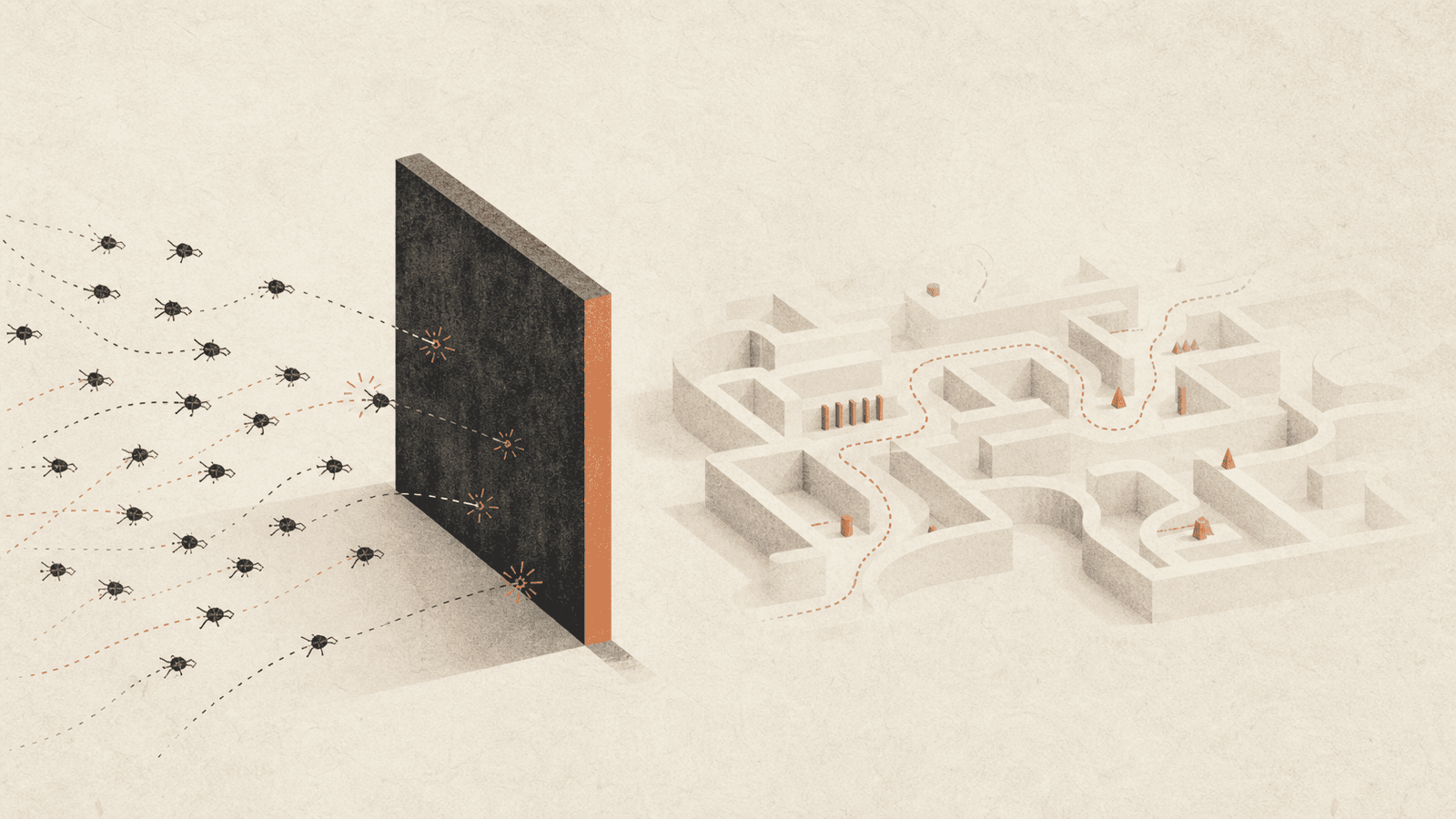
Zero Trust for AI Agents 對每一項控制都套用的一個設計審查問題:這會讓攻擊變得不可能,還是僅僅繁瑣? 價值來自摩擦而非硬屏障的控制——額外的橫向移動跳數、速率限制、非標準埠、SMS-based MFA——在能以規模磨過繁瑣步驟的對手面前會急劇失效。這個框架之所以重要,是因為 agentic 攻擊者具有無限耐心且每次嘗試成本趨近於零:「這樣做太久、不值得」這類建立在人類假設上的判斷已不再成立。
通過測試的控制項模式#
通過測試的控制項共享一種結構特性——它們移除一項能力,而非節流它:
- 硬體綁定憑證(無法被竊取,而不只是難以竊取)
- 過期/短命 token(視窗會關閉,而不只是變窄)
- 密碼學身分(偽造在計算上困難,而不只是不便)
- 不存在的網路路徑,而非僅是不便穿越的路徑
框架的經驗法則:「有疑慮時,優先選擇移除能力的控制,而非節流能力的控制。」
應用場景#
此測試影響每一層級的建議,並在決策點明確出現:
- Foundation 底線提高 —— 僅靠摩擦的控制(可從 lockfile 用 grep 掃出的長效 API 金鑰輪替、SMS MFA、速率限制)即使在入門層級也不再合格。
- 爆炸半徑評估(Phase 3) —— 「若你的圍堵計畫依賴摩擦……就假設它會失敗。」見 Blast Radius (Agentic)。
- 工具沙箱化(Phase 5) —— 「速率限制是摩擦,不是屏障:它們爭取時間,但無法阻止意志堅定的 agentic 攻擊者。」
源流與匯聚#
LLM-Driven Vulnerability Research 獨立提出相同論點,觀察到*「價值來自讓利用變得繁瑣的緩解措施,會在能以低成本磨過繁瑣步驟的模型輔助對手面前弱化,」* 而硬屏障(KASLR、W^X)仍然重要。兩個來源匯聚:攻擊性研究在實證上發現摩擦會衰退;安全框架將該發現轉化為規範性的設計測試。兩者皆下游自 AI-Accelerated Offense —— 每次嘗試成本趨近於零,正是 AI 加速帶給攻擊者的東西。
相關連結#
- Zero Trust for AI Agents —— 採納此問題作為常設設計審查項目的框架(樞紐)
- AI-Accelerated Offense —— 為何每次嘗試成本趨近於零,而這正是摩擦控制失效的原因
- Blast Radius (Agentic) —— 依賴摩擦的圍堵計畫無法通過此測試
- LLM-Driven Vulnerability Research —— 對同一摩擦衰退現象的獨立、實證性陳述
- Least Agency —— 「移除能力優於節流」是 least-agency 以啟發式表述的版本
開放問題#
- 縱深防禦傳統上堆疊摩擦控制,理論上足夠多就能加總成屏障。此測試是否否定分層摩擦,還是僅將其排在能力移除之下?
- 某些控制對人類是摩擦、對代理卻是屏障(或相反)。此測試是否應相對於代理而定,在混合人類/代理威脅模型下如何評估?
資料來源#
- Zero Trust for AI Agents —— 「設計測試:不可能,而不只是繁瑣」(原則部分);在 Phase 3 與 Phase 5 及結語章節中再次出現
Cited by 11
- Foundation → Enterprise → Advanced: Is the Agent Access-Control Jump a Cliff?
No cliff — Enterprise (ABAC + dynamic privilege elevation with return-to-baseline + mTLS + sandboxing) is the pragmatic…
- Agent Identity and Authentication
The foundation control for agentic Zero Trust: cryptographically-rooted per-agent identity (→X.509→hardware attestation…
- Agentic Prompt Injection
Direct and indirect injection of malicious instructions into an agent; LLMs cannot reliably distinguish information fro…
- AI-Accelerated Offense
Frontier models compress the vulnerability-to-exploit timeline from months to hours at marginal dollar cost; both attac…
- Blast Radius (Agentic)
The potential damage if an agent is compromised; the unit Zero Trust's 'assume breach' posture is built to contain via…
- Capability-Gated Model Fallback
Fable 5's safeguard architecture: classifiers detect cyber / bio-chem / distillation queries and route the response to…
- Least Agency
OWASP term extending least privilege to agents: constrain not just what an agent can access but what each tool can do,…
- LLM-Driven Vulnerability Research
Claude Mythos Preview's emergent cybersecurity capabilities: autonomous zero-day discovery, full exploit chains, and An…
- AI Engineering & Agent Tooling
Map of Content for the ai-engineering domain — 36 concepts. Curated entry point; see Home for all domains.
- Open Questions Backlog
_96 pages with open questions, as of 2026-06-14._
- Zero Trust for AI Agents
Anthropic's security framework for deploying autonomous agents: trust nothing / verify everything / assume breach, appl…
Related articles
- Autonomous Defense
Running security operations at the speed of AI-accelerated threats: put a model at the front of the alert queue, automa…
- Zero Trust for AI Agents
Anthropic's security framework for deploying autonomous agents: trust nothing / verify everything / assume breach, appl…
- Agent Supply Chain Risk
Runtime-composed agent ecosystems expand the supply-chain attack surface: model poisoning (250 docs backdoor a 13B mode…
- Agent Identity and Authentication
The foundation control for agentic Zero Trust: cryptographically-rooted per-agent identity (→X.509→hardware attestation…
- Blast Radius (Agentic)
The potential damage if an agent is compromised; the unit Zero Trust's 'assume breach' posture is built to contain via…